Egypt Travel is now a part of The Globe Trotter. Enjoy travel updates from all around the globe on the new website. Thank you for your support and love.

The Great Sphinx of Giza

A mythical creature with the body of a lion and the head of a human, Sphinx has always been a fascination to me. And on our recent visit to Egypt, had the chance to see the Great Sphinx of Giza. Although there are many sphinxes in Egypt, the most famous and most visited I think is the Great Sphinx of Giza.


Located on the Giza Plateau near the Great Pyramids of Giza, the Sphinx is a limestone statue standing tall at almost 64 ft high and 241 ft long. It is said to have been built during the reign of the Pharaoh Khafra. But this fact is still debated by many. Numerous theories have been proposed pertaining to the time the Sphinx was built or as to during whose reign it was built.


The Sphinx remained buried under the sand for a long period and it was only in 1930s that it was excavated completely. The Sphinx is missing its nose and its beard. Again various theories have been proposed each claiming the loss of the nose to a different reason.


Well, whatever may be its date of construction or the reasons behind the missing parts, the Great Sphinx is a wonder. Don't miss it if you are in Cairo. To see the Sphinx in person does not compare with seeing it on televison or in movies. Up close it is amazing and an unforgettable experience.


Note: as with most tourist sites in Egypt, beware of the vendors. It tends to become annoying to be solicited so aggressively and persistently. Lot of peddlers around, so keep an eye out.

The Mosque of Muhammad Ali or the Albaster Mosque in Cairo

One of the main landmarks in Cairo is the Mosque of Muhammad Ali or the Albaster Mosque. The mosque situated atop the citadel was built in the memory of Tusun Pasha, the oldest son of Muhammad Ali. The mosque has a large central dome and four small circular domes which are surrounded by four semi-circualr domes. There are 2 minarets built in the Turkish style.


The mosque was built with limestone but some parts of it are tiled with Albaster and hence it is often referred to as the Albaster Mosque. The mosque also has a clock tower. Our guide told us the history of the clock. In 1829 Muhammad Ali Pasha, offered the two obelisks that marked the entrance of the Luxor temple to France as a friendly gift. In 1833 one of the obelisks was shipped to France. In return King Louis Philippe of France sent a clock to Muhammad Ali. Since the clock arrived in Egypt it has never worked. But nonetheless it was mounted onto the clock tower in the mosque and it remains there till date.


When you enter the mosque you need not cover you head but footwear is not allowed. You either remove your footwear or buy the shoe covers that are sold there. Also carry water and refreshing wet wipes as it is extremely dusty. Infact the whole mosque was covered in dust.

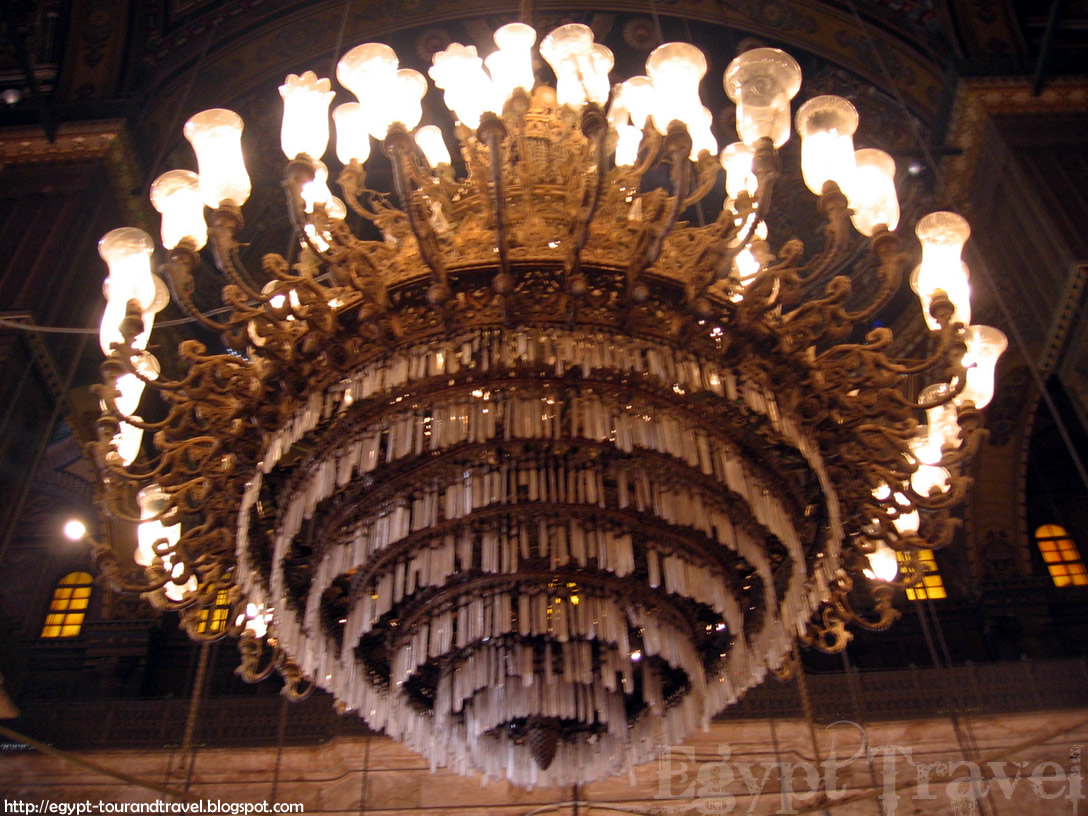
The interiors of the mosque are lovely. The design and the motifs on the ceiling was beautiful. The Chandeliers were lit up and it looked amazing. Lots of lamps were hung in a beautiful pattern.


The minbar(pulpit) of the mosque is beautiful with a striking green and gold colour combination and intricate carved work. This is where the imam (the one who leads the prayers) stands and delivers the sermons or lectures.


The views from the mosque are beautiful. You get a good panoramic view of Cairo from here. Overall, an interesting visit. If you love history and architecture, you will love this place.


The Stepped Pyramid of Saqqara (The Pyramid of Djoser)

The Stepped Pyramid or the Pyramid of Djoser is located in the Saqqara necropolis. The pyramid was built in 2630 BC by Imhotep for the Pharaoh - Djoser. Imhotep was the chancellor during the reign of King Djoser and was the one who designed the pyramid earning him the honour of being the first architect in early history.


Standing at 204 feet, the stepped pyramid was initially not intended to look like how it does. The construction was started off as a traditional flat roofed mastaba wherein the grave was supposed to be underground with just one step or mastaba over the ground. But over time, stretching over the 19 year reign of King Djoser, Imhotep added 5 more steps each decreasing in size as they rose upwards. This structure was to represent King Djoser's power and greatness.


The Stepped pyramid is said to be first ever stone construction by mankind. And when it was completed it was the largest building of its time. The entire Saqqara complex was surrounded by a 10 metre high limestone wall. The wall facade had 14 illusional gates/doors and one real gate which will lead you into the courtyard through the roofed colonnade. The false doors were meant for the passage of Kind Djoser's spirit between life and afterlife.


We went with a guide and it was really helpful as he explained the history of the place and about the King and his Chancellor. Last month during our visit the pyramid was under renovation and hence there was lot of scaffolding. Entry inside the pyramid was restricted. However, the pyramid was interesting to view from outside as well.


The best time to visit would be early mornings as the crowd of visitors is less at that time. It wasn't crowded when we went and we could look around peacefully. Take sufficient water and a sun hat as there is no shade inside the complex. There are locals inside offering camel/donkey rides. They will come over and offer to take your picture with the camel or the donkey. But be aware that they will ask for a payment for this later.


Overall, an interesting visit. Not as impressive as the Pyramids of Giza but worth as visit a this one is the 'original' pyramid - the first one ever to be built.